.png)
60 YEARS OF
THE SOUND OF MUSIC
Celebrating the 60th anniversary of The Sound of Music soundtrack album, pressed in New Malden
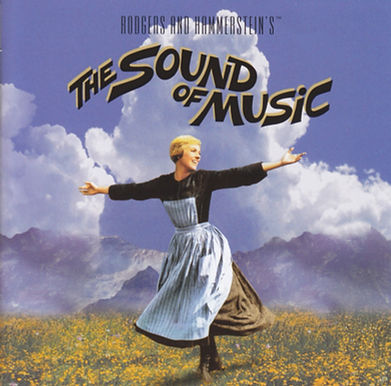
The Sound of Music soundtrack album was pressed at Decca Records in New Malden in 1965. It topped the UK album charts for an unprecedented 70 weeks in total between 1965 and 1968!
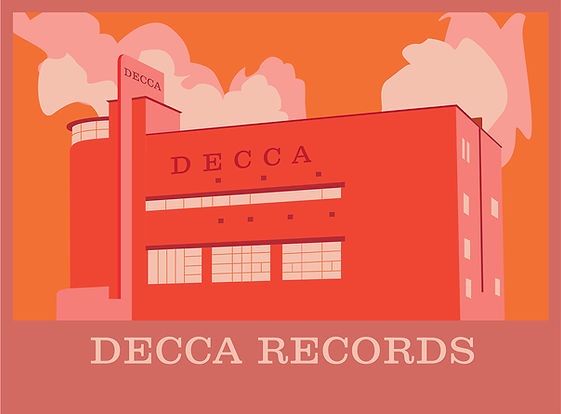
When Edward Lewis founded Decca Records in 1929 he acquired the Duophone Record Company, and with it its premises on Burlington Road, New Malden. This was to become the only Decca pressing plant in the UK and a major local employer, hiring hundreds from Kingston and the surrounding boroughs at any one time. Of the records pressed here in New Malden – at peak production up to 60,000 a day – many can now be found dispersed all over the world.
To celebrate the legacy of this amazing music heritage, New Malden Residents' Association, The Community Brain and The Community Train held an event at New Malden Station in September 2025.


.png)

.jpg)
NEW MALDEN CELEBRATION
New Malden station was transformed into a stage on 13 September 2025 for a unique community singalong marking three anniversaries: Railway 200, Kingston 2025 (1100 years since King Athelstan’s coronation), and 60 years of The Sound of Music. The album’s local link, having been pressed at Decca Records in New Malden, gave the celebration special resonance.
Organised by New Malden Residents’ Association (station adopters) and The Community Brain CIC, with funding from SWR and the Royal Borough of Kingston, the event brought together New Malden’s richly diverse communities, including its significant Korean, Tamil and Hong Konger populations. Local soprano and choir leader Jane Wilkinson led the performance with her choir, joined by others such as Issac’s Well Korean Choir. Participants donned costumes, a dramatic film backdrop was hung from the multistorey car park, and the whole station space was alive with music and colour.


Around 300 people attended, including councillors, the local MP, and Community Rail representatives. Feedback was overwhelmingly positive. The Korean choir leader spoke of their pride in being part of a community-hosted event. One participant described it as “a huge success… a good time was enjoyed by all,” while another noted that “even the rain co-operated.”
A particularly moving response came from a parent who attended with her daughter, who has profound and multiple learning disabilities. She wrote:
“It was fun, fabulous and inclusive. My daughter found it hilarious seeing lots of people dressed up as nuns… she enjoyed listening to everyone singing and bobbed up and down in her wheelchair, dancing to the music. Lots of people came and spoke to her and made her feel welcome. A really lovely community day.”
The event also formed part of Community Brain’s Reappraising the Suburbs project, exploring the recent history of Kingston. Building on its success, further work on the history of Decca Records is now planned, ensuring the legacy continues. The project strengthened local pride, forged new connections and showed how stations can be cultural hubs – linking heritage, music and rail to create lasting community impact.


LONDON WATERLOO SINGALONG
Not content with celebrating Decca and The Sound of Music in New Malden alone, a second show (and a bigger venue) was in order. The call went out: we rallied the choir, dusted off our habits, and hopped on a train bound for London with plans to bring our alpine chorus to Waterloo Station. Any event taking place in among the busy crowds of a major station is quite the logistical undertaking. But in return, our two performances could reach an audience of hundreds, or even thousands if a few extra trains were cancelled; at the very least, we wouldn’t have to worry about the rain for a change.
With our backdrop deployed and nuns assembled around the piano near Platform 19, the first show kicked off at 11:31am-sharp to the tune of the film’s titular track. The choir sounded good — they sounded really good, and with the help of lead singer and soprano Jane Wilkinson, managed to fill the acoustically cathedral-like north section of the station. A crowd quickly gathered, peering down from the main concourse.
Our position on the lower floor kept us out of view from much of the passengers further back in the main hall. But instead of limiting our audience, it may well have brought people in. Not only were we not blocked by any onlookers on the lower level, but passers-by curious as to where the live rendition of this 60-year-old film was coming from would not be able to satisfy their nosiness with a quick glance. Instead, they’d have to follow the sound of music and search for us. But once you arrive, and you’ve found a good spot in the crowd… what’s the harm in staying for one more song?
Less than 30 seconds in and we already had the makings of a decent crowd. So many singers turned up to lend us their voices, the audience turnout was good and their reactions even better — some even picked up a song sheet to join in on the fun — but we think the touching words many left as feedback speak for themselves.
ATTENDEE FEEDBACK
-
"It was a beautiful event! We look forward to many more events like this one. Thank you."
-
"Excellent - More of these! Great community event for everyone to get involved."
-
"Such a boost as I am down in London for funeral arrangements for my father. My late mother was a singer who loved "The Sound of Music". Thank you for cheering my day. I hope to do this again, in the future."
-
"Brilliant! Loved to sing. Great singer and pianist. Thanks for giving us the lyrics! More please - well done!"
-
"Absolutely loved it. Thank you to all involved. An uplifting experience for singers & audience. A wonderful community event. Can we do it again please?"
-
"Thank you so much :) This is utterly terrific + uplifting + I loved singing over the top of the train announcements! Beautifully led + organised."
-
"Absolutely hilarious to stumble on!! So well organised, the backdrop screen is great, really eye-catching. Fantastic to have the song sheets so that everyone can join in. Such a lovely thing to do and the lady who led us has an amazing voice. Thank you, it was 5 stars."
-
"Excellent! Let's do it again."
-
"It was a fantastic and amazing event. All the family was delighted."
LEARNING RESOURCES
If you'd like to learn any of the songs, please take a look at the resources below.
CHOIR LEADER:
JANE WILKINSON
Jane trained as a lyric Soprano at the Royal Conservatoire of Scotland gaining a BMus (Hons) and then at the Royal College of Music where she was awarded a graduate diploma.
At the Royal College of music she won the Godfrey van Someran competition for English song and was a runner up in the BBC Radio 3 Kiri Te Kanawa competition. Her solo recital work has taken her across the UK Europe and South Africa. She has performed at the Edinburgh Festival Theatre, the Usher Hall, Bridgewater Hall, Royal Albert Hall, Wigmore Hall among many others.
Operatic performances include Marriage of Figaro (Mozart), The Vanishing Bridegroom (Weir), Ronaldo (Handel), Cendrillon (Massent) and Dido and Anaeus (Purcell). She has premiered several lead roles; Louise in These things happen (Jonathan Pease), Romola in The Clown of God (Mander), Death in The Ancient Mariner (Mander), Woman One in Hey! Jack! (Nasseur) and Cynthia in The Dowagers Oyster (Mander).
Oratorio plays a large part in Jane's singing career. She has been soprano soloist in Gloria (Vivaldi), Te Deum (Dvorak), C Minor Mass (Mozart), Requiem (Mozart), Messiah (Handel), Israel in Egypt (Handel), Magnificent (Rutter) and Nelson Mass (Hayden).

THE SOUND OF MUSIC HERITAGE
The Sound of Music film was released in cinemas in March 1965. Although initial critical response to the film was mixed it was a major commercial success becoming the number one box office film after four weeks and the highest-grossing film of 1965.
The soundtrack album was released later in 1965 becoming one of the most successful soundtrack albums in history. The album reached the number one position on the Billboard 200 that year and remained in the top ten for 109 weeks. The album, the best-selling in the United Kingdom in 1965, 1966 and 1968, was produced and distributed from New Malden by Decca Records from their factory and offices on the Burlington Road.
Decca UK originally focused on jazz records, receiving rapid acclaim for its sound quality. Although the musical offerings would later diversify – with rock ‘n’ roll, pop music and progressive rock coming to the fore – dedication to ground-breaking techniques continued to characterise Decca Records. The company pushed innovations like the Decca Tree and LPs (long-playing records), with the pressings at New Malden driven by such technologies.
In 1962, Dick Rowe at Decca Records infamously rejected The Beatles, but would go on to sign The Rolling Stones, allegedly at the suggestion of George Harrison. Other successful signings included Engelbert Humperdinck, Tom Jones and The Bachelors, several of whom visited the factory and played for the staff. Notable figures like Prince Philip and Princess Margaret also came to the plant, and resulting coverage ensured that the Decca factory drew national attention.
Archive footage of Prince Philip’s visit in 1957 (and a number of local residents)
As vinyl fell out of fashion, Decca Records began to lose momentum. Following the death of Lewis in 1980, Decca UK was sold to PolyGram. The New Malden plant closed the same year putting hundreds out of work and having a significant impact on the local economy. However, despite the closure, Decca is still fondly remembered today by many New Malden residents who worked there and is an integral part of any nostalgic, historical and or heritage review of the ‘Village’s’ past.